Take a look where we stand on these current issues…
1. Farm Profitability & Rising Costs
Key Issues:
Rising input costs (fuel, fertilizer, feed)
Volatile commodity prices
Supermarket pricing pressure
Cheap imports undercutting local producers
Reduced subsidy certainty (post-policy reforms)
Our solutions:
Fair farm gate prices
Stronger protections in trade deals
Transparent supply chain pricing
Support for domestic food security
Simplifying agricultural support schemes
2. Rural Cost of Living & Services Decline
Key Issues:
Limited public transport
Closure of village shops and banks
Access to GPs and healthcare
Poor road maintenance
High fuel dependency
Our solutions:
Rural service guarantees
Incentives to keep rural banks and post offices
Investment in rural transport networks
Dedicated rural healthcare funding
3. Broadband & Digital Connectivity
Key Issues:
Slow broadband
Patchy mobile signal
Digital exclusion for farm businesses
Our solutions:
Full-fibre rollout prioritising rural areas
Improved mobile coverage guarantees
Digital grants for farm innovation
4. Environmental Regulation & Net Zero Pressures
Key Issues:
Complex environmental rules
Net zero targets impacting livestock farmers
Land use conflicts (solar farms vs food production)
Flooding and climate instability
Our solutions:
Practical, farmer-led environmental schemes
Payments for stewardship and carbon storage
Flood defence investment
Balanced land-use policy
5. Rural Housing & Young Farmer Retention
Key Issues:
High rural house prices
Young people leaving villages
Farm succession challenges
Lack of affordable housing for agricultural workers
Our solutions:
Affordable rural housing policies
Tax support for farm succession
Apprenticeships in agriculture
Support for diversification (farm shops, tourism, renewables)
A couple of conservation case studies
We believe in ‘conservation through wise use’: the incentive of sustainably harvestable resources be that deer, grouse or trout as a means of protecting and producing more wildlife in general by leaving the ground in better condition than we found it. Our generation continues to increase habitats and biodiversity through land management and predator control.
Research from our affiliated organisations over the last 25 years proves this is effective.

Don’t Ban the Burn
2022 was a record year for large wildfires in England. Nearly a thousand were recorded, due a higher number of visitors to rural areas and an increasing amount of combustible vegetation. Fire and rescue services are out of their depth and independent studies show that wildfire poses a real threat to human life. Furthermore, highly protected habitats will be devastated and millions of tonnes of carbon dioxide will be released from peat soils.
Scientists have predicted a ten-mile inferno stretching from Sheffield to Glossop with a wall of flames as tall as a three-story building destroying the length of a football pitch every two and half minutes.
The Conservative Friends of the Countryside support controlled burning to break up fuel loads and minimise the risk of wildfire spreading.
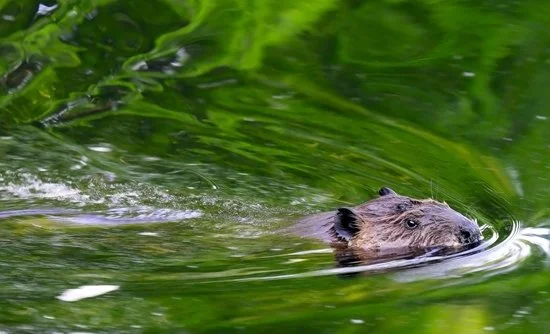
The Reintroduction of Beavers - No thanks!
Beavers build dams using riparian trees and branches, and the dams can be multiple along lengths of rivers and in some cases over six feet high. These threaten to restrict the vital movement of adult salmon, sea trout and brown trout to and from their spawning grounds in small streams and tributaries, and their juveniles as they migrate downstream to sea.
Without a funded science-based management strategy, with a clear focus on mitigating impacts for salmon and trout, there is a real risk that beaver dams will cause harm to these vulnerable protected populations.

Neonicotinoids - there’s no better alternative
In 2016 the Agriculture and Horticulture Development Board estimated a £67m reduction in yield from increased transmission of the turnip yellow virus to oilseed rape as a result of neonic restrictions
Economically viable, large-scale agriculture that is capable of producing the food we need requires pest control, therefore if neonics are not available, alternatives will be needed, currently there aren’t any.
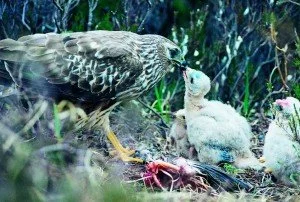
Hen Harriers - Maintain Brood Management
In 2013 there were no successful Hen Harrier nests in England. The ground-nesting bird and its eggs and chicks are therefore particularly vulnerable to predation.
In 2022 well over a hundred Hen Harriers were hatched. Most of nests are on land managed as grouse moors, all members of the Moorland Association. Many birds have benefited from supplementary feeding by gamekeepers, a tactic associated with increased nesting attempts.

Trophy hunting - Vital for overseas conservation
Conservative Friends of the Countryside supports the sustainable harvest of wildlife overseas providing such ‘trophies’ are proven to be from a sustainable source. We understand that regulated trophy hunting programmes are vital in delivering employment and conservation abroad. Finally we support the import and export of such trophies and oppose further legislation.